Bridging the Financial Divide
PEAK is equipping rural entrepreneurs with digital banking.
Africa
October 12, 2026
How Olga and Rosalino are recovering ancestral knowledge through organic strawberry farming
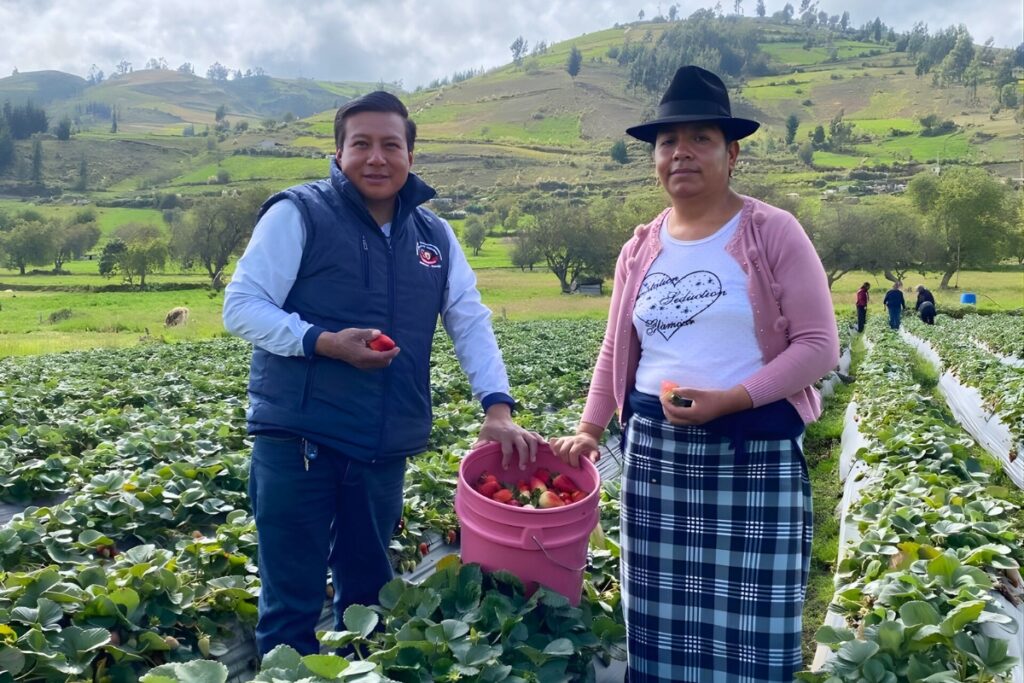
In Cebadas, Ecuador, ten thousand feet above sea level, you’ll find a community nestled among the clouds—a community characterized by hard working farmers and fields red with ripe strawberries. Making an income off the land didn’t come easily. Many of these Indigenous growers struggled to afford chemical plant feed and often had to go without. As a result, their plants suffered. And just like dairy farmers in nearby Guamote, growers struggled to find markets for their produce.
In light of these struggles, many farming families chose to migrate. But not Olga and Rosalino. They, along with their 19-year-old son, decided to stay. “We wanted to work here at home instead of migrating, and to set an example for others,” said Olga. “To show that as women, we can work in the fields and also give jobs to other people.”
In 2020, Olga and Rosalino formed a community cooperative where local farmers could collect and sell their produce together, uniting to find markets they could not reach alone. They found buyers in coastal Guayaquil—the most populous city in Ecuador. Every so often, Rosalino would pack up their strawberries in a truck and transport them to the coast. It was a long drive, but worth it.
Around 20 producers joined the cooperative, each with an average plot of five acres. Many of these farmers, including Olga, created jobs for others in their community—often women, who sought additional income while their husbands worked other jobs. “We focus on the most vulnerable,” she said; “those without steady jobs.”
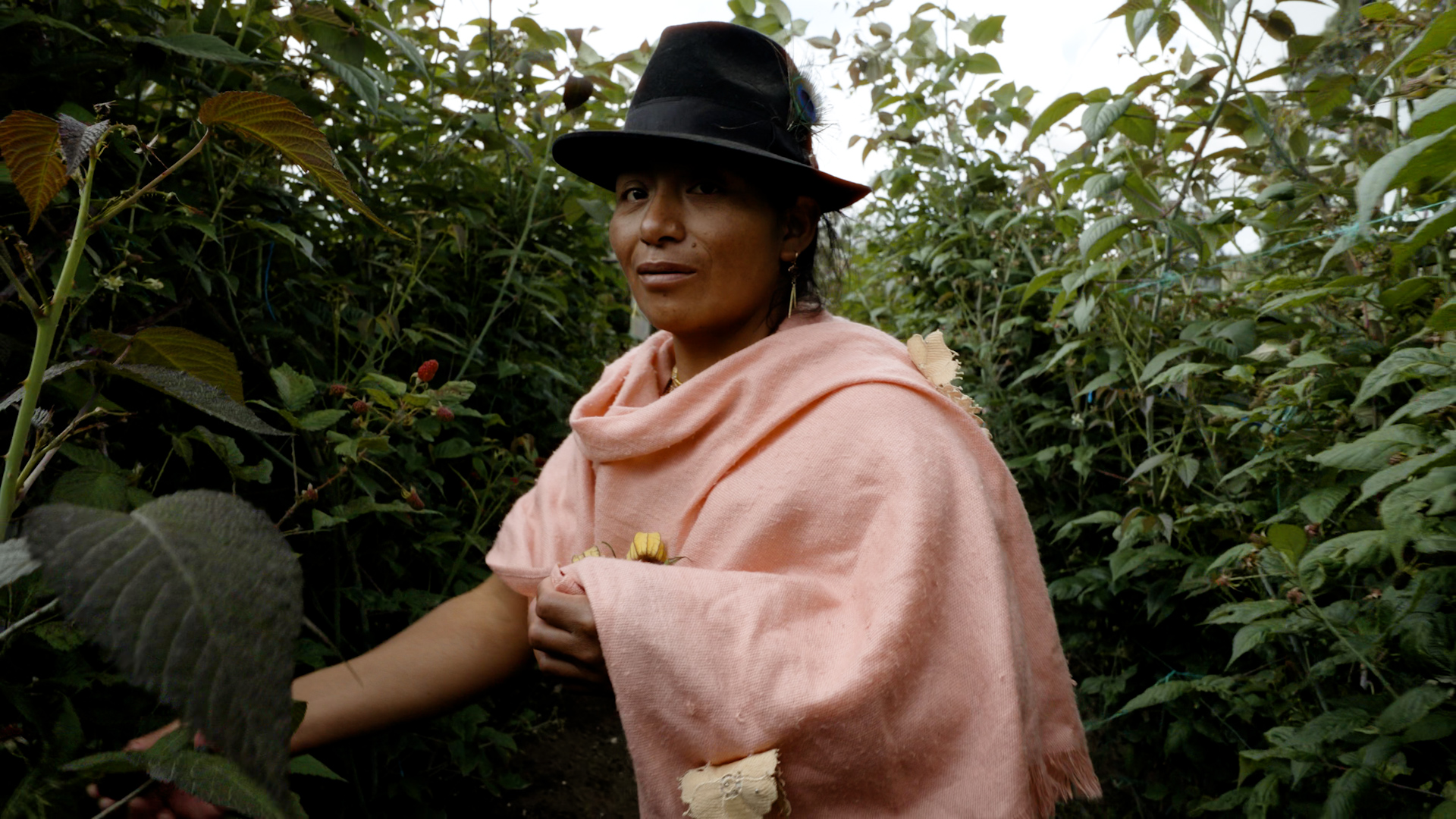
Things really accelerated when Olga and Rosalino matched their cooperative with Fundación Yachashun Kawasaypak del Ecuador (FYKDE), a local partner of Partners Worldwide. “FYKDE means learning to live,” said Raúl Ruiz, Executive Director. “That’s what we do—teach and train people so they can live better.”
Crucially, Olga and Rosalino learned to produce biol, a fully organic plant feed made from fermented manure and kitchen waste. Alfonso Guzman—local agro-engineer and FYKDE technician—showed them how. Once the necessary ingredients are mixed in a 200-liter tank, they’re left to ferment for up to three months. All the farmers have to do next is equip a spray backpack and start applying.
Now, growers don’t have to worry about affording plant feed—they can produce it themselves, for free!
Olga and Rosalino were eager to pass on what they had learned from FYKDE and engineer Alfonso. “It’s not always easy to convince people, but our goal as a cooperative is to show that organic methods work,” Rosalino said. “We also want to recover the ancestral knowledge of our parents and grandparents, who never used chemicals. We’re trying to restore that wisdom and share technical assistance, like the foundation shared with us, so others can start their own projects.”
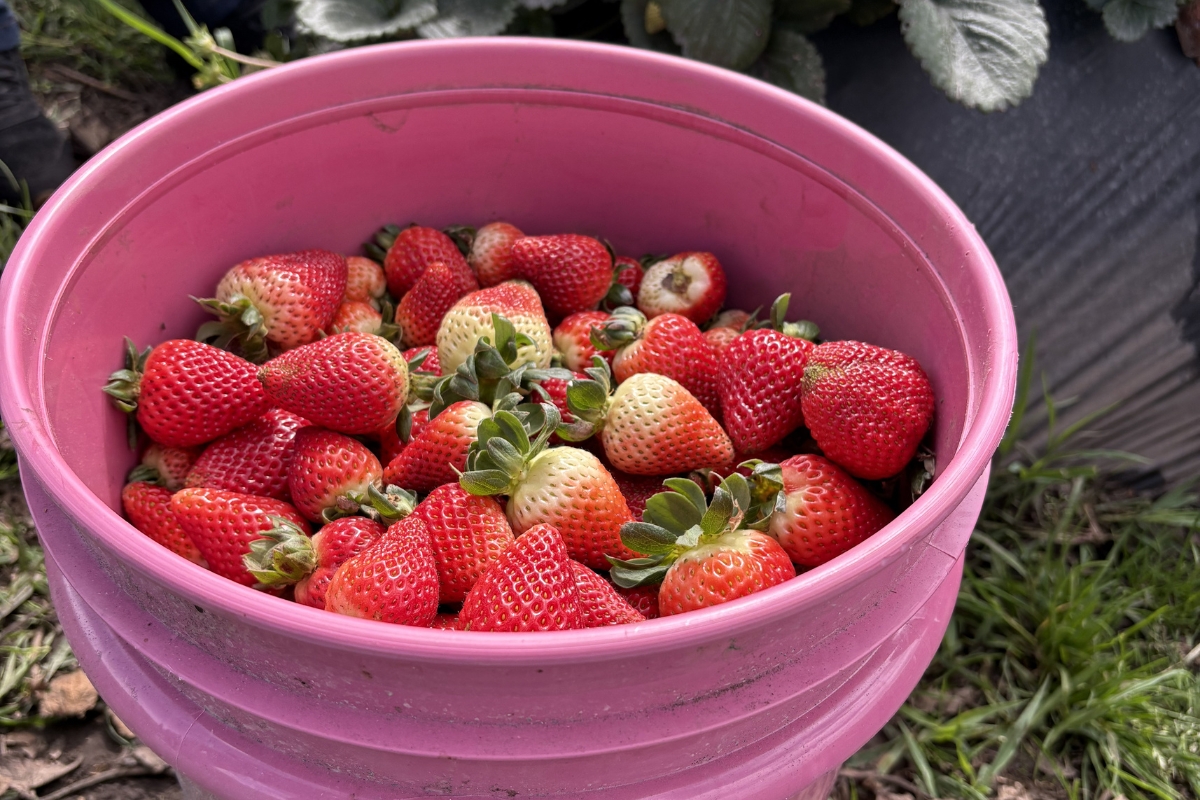
Looking ahead, Rosalino envisions processing the berries into value-added products like jam, wine, and vacuum-packaged goods. “The dream is to industrialize and sell a finished product at a better price.” Realizing this vision will require a collection and processing center; they have the land already, now they just need to build the facilities.
Empowered by FYKDE and the wider PW network, Olga and Rosalino are helping build livelihoods and strengthen the local economy, keeping their community together. That’s the power of local leaders, and it’s why PW works through locally-led organizations—strong communities are built by the people who know them best.